


Marriage, Karuwanci or Jawarci?
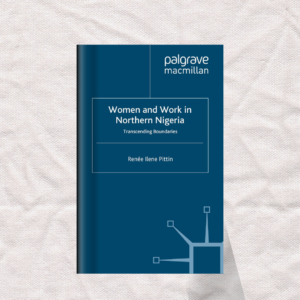
When we think of women in Northern Nigeria, the role that predominantly comes to mind is that of a wife. It is, without a doubt, the most desired and respected position of women in Northern Nigeria. Renée Ilene Pittin discusses this role as well as others in her book, Women and Work in Northern Nigeria: Transcending Boundaries. According to her, there are three main paths available to women in Northern Nigeria. They are marriage and remarriage, courtesanship (karuwanci), and the state of being a single woman or divorcee (jawarci). The one I found particularly interesting is karuwanci.
In spite of society’s view on prostitution, Northern Nigerian karuwai are possesed of pride and discipline. My shared opinion changed while doing research on the red light district for a book I was co-writing. We had set a few scenes in a gidan mata, owned and managed by a woman we called Magajiya. Authenticity was important to us. So one hot Saturday morning, we boarded a tricycle going to Obalende and my education into the lives and lifestyle of karuwai began.
Karuwanci: A Means of Survival
Despite her research being conducted in Katsina and mine in Kaduna, I find similarities between my research and Renée Pittin’s work. In particular, the pressure and reasons that led many of these women to walk this path.
“Three major factors were cited by women as the … cause of their leaving the natal or marital home, and entering the untried world of karuwanci… disagreements with kin over marriage termination and marital choice; poverty; and childlessness.”
As you can imagine, the decision by young women of marriageable age to choose karuwanci is not a simple one. Their upbringing typically involves adhering to the mandates of their family, religious beliefs, and societal traditions. Until doing so becomes more harmful to them than the alternative. A typical example is the story of Asiya.
By the age of twenty-five, Asiya had been married three times. Her first marriage was arranged by her parents to a non-relative they respected. With Asiya constantly running back home, the marriage only lasted three months. Frustrated, her husband divorced her and had his marriage payments returned.
Immediately after her Idda (customary waiting period after the dissolution of a marriage for women), her parents married her off to a relative in a nearby village. Thirteen at the time, Asiya’s marriage to him lasted four years. During this time, they had one child that died in infancy. After Idda, Asiya married a man of her own choice, and they lived together for six years. Having no children, they decided to get a divorce and she returned home once more.
Asiya left Katsina upon discovering her family’s plan to give her away to yet another man. Uninterested in living through another unwanted marriage, she opted to live a life of karuwanci instead.
It is easy to judge women who pick this profession. To accuse them of being too lazy to find better opportunities, like trading, farming, or the aforementioned marriage. However, the lack of money, education, and strong connections leaves them with fewer options than most. I suspect they would rather choose which strangers to have sex with than allow their relatives to control this aspect of their lives. After all, marriage only promises one official payment for a lifelong union. They shun our societal norms to take back their bodies and agency, for better or worse.
Renée’s book touched upon several other opportunities that the life of karuwanci afforded these women which I choose not to talk about here. One thing is for certain though, a Northern Nigerian karuwa is not simply a woman who exchanges sex for money. Please read the book for further details.
Trading with Dignity
Another thing worthy of note is how these women approach their profession with a sense of dignity. Based on Renée’s research, there are primarily two types of women who exchange sexual favours during the course of her survey: the Karuwai and the Akwato. The former are all Hausa women while the latter are other ethnicities residing in Katsina, like Idoma, Ibo, etc. We can split the karuwai into two more groups. The older, more traditional women and the younger, more modern ones.
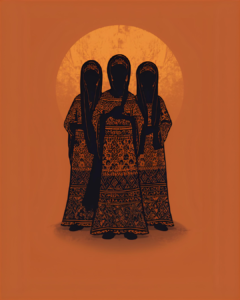
The latter, also known as ‘yan good evening’, are distinguished by their use of English, western dress, and assertiveness. They seek wealthy men and loiter on roads leading to social hubs like clubs, hotels, and the elite parts of town. Upon finding such a man, he must court and woo them much like their traditional counterparts. In their opinion, to engage in “pecuniary bargaining” would only reduce the relationship.
The traditional karuwai dress like any other Northern Nigerian woman in wrapper and a blouse. They mostly work close to their homes of residence and are more concerned than the ‘yan good evening,’ with living in accordance with traditional Hausa ideals of womanhood. Together. They form two distinct sides of the same coin.
In contrast, the akwato, or ‘yan how-much-you-go-pay,’ provide their services to any patrons at a prearranged price. These “women usually rent rooms in the larger clubs and hotels, and sometimes have their minimum price in writing on the door or within their rooms. Otherwise, the prospective customer must agree on an acceptable price before gaining the services of the akwato, hence the moniker, ‘how much you go pay’. Karuwai consider this behaviour shameful and have little respect for the akwato.”
Karuwanci Evolved or Disguised
I find it fascinating how modern day courtship has skewed towards the direction of ‘yan good evening’ karuwai, despite the negative connotation and stigma from society. There is a transactional tone to the way individuals date these days. Yes, courtship, but also the seeking of attention, exchanging sexual favours, or outright sex in return for monetary gifts and/or other benefits.
As this transformation only took place over a few decades, I wonder about the change that awaits Northern Nigerian society in the decades to come.